
Diabetes in India 2026: 101 Million Cases, Rising Health Risks & How We Can Prevent the Epidemic
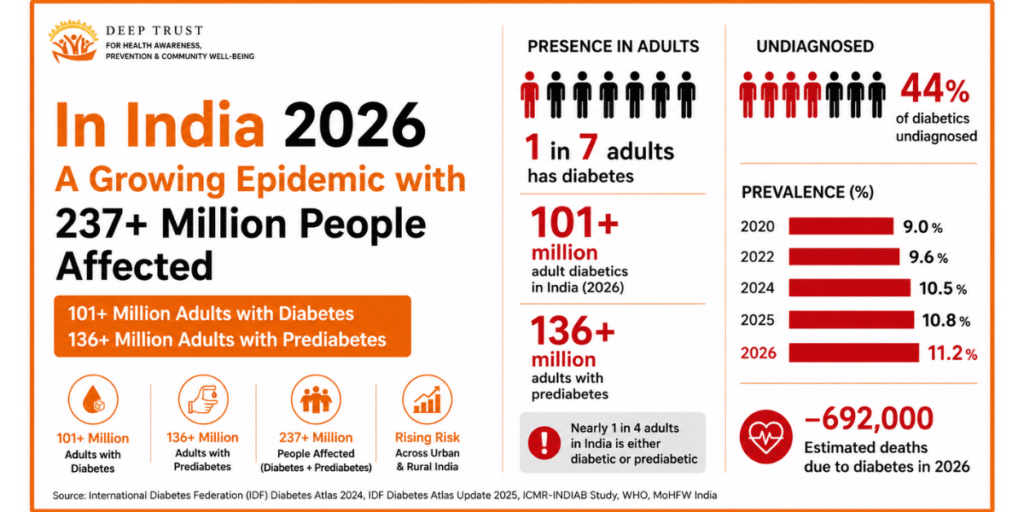
Diabetes in India 2026: Rising Burden, Risks & Prevention Strategies DEEP Trust Health Insights Category: Public Health Awareness & Non-Communicable DiseasesPublished By: DEEP TrustPublished Date: June 2026 Understanding India’s Diabetes Crisis India is currently facing a rapidly growing diabetes epidemic. According to national health estimates, more than 101 million adults are living with diabetes, while nearly 136 million individuals fall under the prediabetes category. Consequently, a significant portion of the population is either already affected or at high risk. Moreover, this trend highlights a serious public health challenge that requires urgent preventive action. In addition, lifestyle changes, urbanization, and dietary shifts have significantly contributed to the rise of this condition. Therefore, awareness and early intervention have become more important than ever. Preventive healthcare initiatives play a crucial role in early disease detection and awareness. For example community health screening programs help identify health risks at an early stage. Diabetes Statistics in India 2026 Key National Indicators According to recent epidemiological research: Over 101 million adults live with diabetes Around 136 million individuals have prediabetes Nearly 237 million people show abnormal blood glucose levels Type 2 diabetes remains the most common form Younger adults are increasingly affected Source: ICMR–INDIAB Study (ScienceDirect) What These Numbers Indicate These figures clearly show that India carries one of the highest diabetes burdens globally. As a result, healthcare systems are under increasing pressure. Furthermore, many individuals remain undiagnosed until complications appear. Therefore, early screening becomes essential for better outcomes. Source: IDF Diabetes Atlas – India Data What Is Diabetes? Diabetes mellitus is a chronic metabolic condition in which the body cannot properly regulate blood glucose levels. Normally, insulin helps move glucose into cells for energy. However, when insulin production is insufficient or ineffective, blood sugar levels rise. Over time, this imbalance can damage vital organs such as the heart, kidneys, nerves, and eyes. Source: WHO Diabetes Fact Sheet Types of Diabetes Type 1 Diabetes Type 1 diabetes is an autoimmune condition where the immune system destroys insulin-producing cells. As a result, lifelong insulin therapy is required. Type 2 Diabetes Type 2 diabetes is the most common form in India. It develops gradually due to insulin resistance. Additionally, lifestyle factors play a major role. Gestational Diabetes This type occurs during pregnancy. Although it may resolve after childbirth, it increases future risk of Type 2 diabetes. Why Diabetes Is Increasing in India 1. Sedentary Lifestyle Modern lifestyles involve long hours of sitting. Consequently, physical activity levels have significantly decreased. 2. Poor Dietary Habits Increased consumption of processed foods, sugary drinks, and refined carbohydrates has contributed to rising obesity rates. 3. Rising Obesity Obesity directly increases insulin resistance. Therefore, it is one of the strongest risk factors for diabetes. 4. Stress and Sleep Issues Chronic stress and poor sleep disrupt hormone balance. As a result, blood sugar regulation becomes affected. Source: WHO Diabetes Overview Symptoms of Diabetes Diabetes often develops slowly. Therefore, early symptoms may go unnoticed. Common symptoms include: Frequent urination Excessive thirst Fatigue Blurred vision Slow wound healing Sudden weight loss In addition, some individuals may experience tingling sensations in hands and feet. Risk Factors of Diabetes You may be at higher risk if you: Have a family history of diabetes Are overweight or obese Lead a sedentary lifestyle Have high blood pressure Are above 35 years of age Have PCOS or gestational diabetes history Therefore, identifying risk early is crucial for prevention. Diagnosis of Diabetes Early detection plays a key role in preventing complications. Common Tests HbA1c Test Measures average blood sugar levels over 2–3 months. Fasting Blood Sugar Test Checks glucose after overnight fasting. OGTT Evaluates how the body processes glucose. Random Blood Sugar Test Measures blood sugar at any time. Health Complications of Diabetes If not controlled, diabetes can affect multiple organs. Cardiovascular Diseases It increases the risk of heart attack and stroke significantly. Kidney Damage Diabetes is a major cause of chronic kidney disease. Eye Problems It can lead to diabetic retinopathy and vision loss. Nerve Damage High blood sugar may damage nerves, causing pain or numbness. Foot Complications Poor circulation increases the risk of infections and ulcers. Source: WHO Diabetes Complications Prevention Strategies for Diabetes Although diabetes is serious, Type 2 diabetes can often be prevented. 1. Healthy Diet A balanced diet improves blood sugar control. Include fruits, vegetables, whole grains, and lean proteins. Avoid excessive sugar, processed foods, and fried items. 2. Regular Exercise At least 150 minutes of physical activity per week is recommended. For example, walking, yoga, cycling, and swimming are highly effective. 3. Weight Management Even small weight loss can significantly reduce diabetes risk. 4. Stress Management Practices like meditation, yoga, and proper sleep improve metabolic health. Source: WHO Physical Activity Guidelines Preventive healthcare screening helps detect early risk factors before they develop into serious conditions. Diabetes Management Although diabetes cannot always be cured, it can be effectively managed. Proper management includes: Medication adherence Regular blood sugar monitoring Healthy lifestyle Routine checkups Moreover, patient education plays a vital role in long-term control. Government & Global Health Initiatives India and global organizations are actively working to control diabetes. Key organizations include: World Health Organization International Diabetes Federation Indian Council of Medical Research Ministry of Health and Family Welfare These organizations focus on early screening, awareness programs, and lifestyle interventions. Role of DEEP Trust in Awareness DEEP Trust plays an important role in community health improvement. It works through: Health screening camps Awareness campaigns Preventive healthcare education Community outreach programs As a result, individuals become more aware of early risks and preventive steps. A Preventable Health Crisis In conclusion, diabetes has become one of India’s most serious health challenges in 2026. However, the situation is not irreversible. With timely diagnosis, healthy lifestyle changes, and regular screening, many cases of Type 2 diabetes can be prevented. Therefore, collective action from individuals, healthcare providers, and community organizations is essential. Ultimately, prevention remains the most powerful tool to reduce the burden of diabetes in India.